Slushable Blog
Why Is My Ninja SLUSHi Making a Squeaking Noise?
If your Ninja SLUSHi makes a squeaking noise while running, stop, unplug, clean the removable contact points, and reseat the gasket before escalating.

If you are asking why is my Ninja SLUSHi making a squeaking noise while running, start with the removable contact points, not a remote diagnosis of the compressor. Sticky residue, a twisted gasket, or an assembly that is not seated squarely can create friction as the auger turns. The sound alone cannot identify a failed motor or seal.
Use the steps below as a safe first inspection. For the machine’s exact removable parts, cleaning order, and service boundary, follow the current Ninja frozen-cocktail guide and your model’s owner guide.
TL;DR (Quick Fix)
- Stop and unplug before removing parts; use the owner guide for the approved disassembly order.
- Clean sticky residue from the gasket, scraper, and chamber contact areas.
- Check that the gasket is flat, not twisted.
- Reinstall the bowl and auger straight, not at an angle.
- If the squeak returns with clean parts, inspect for worn or damaged seals.
Why is my Ninja SLUSHi making a squeaking noise?
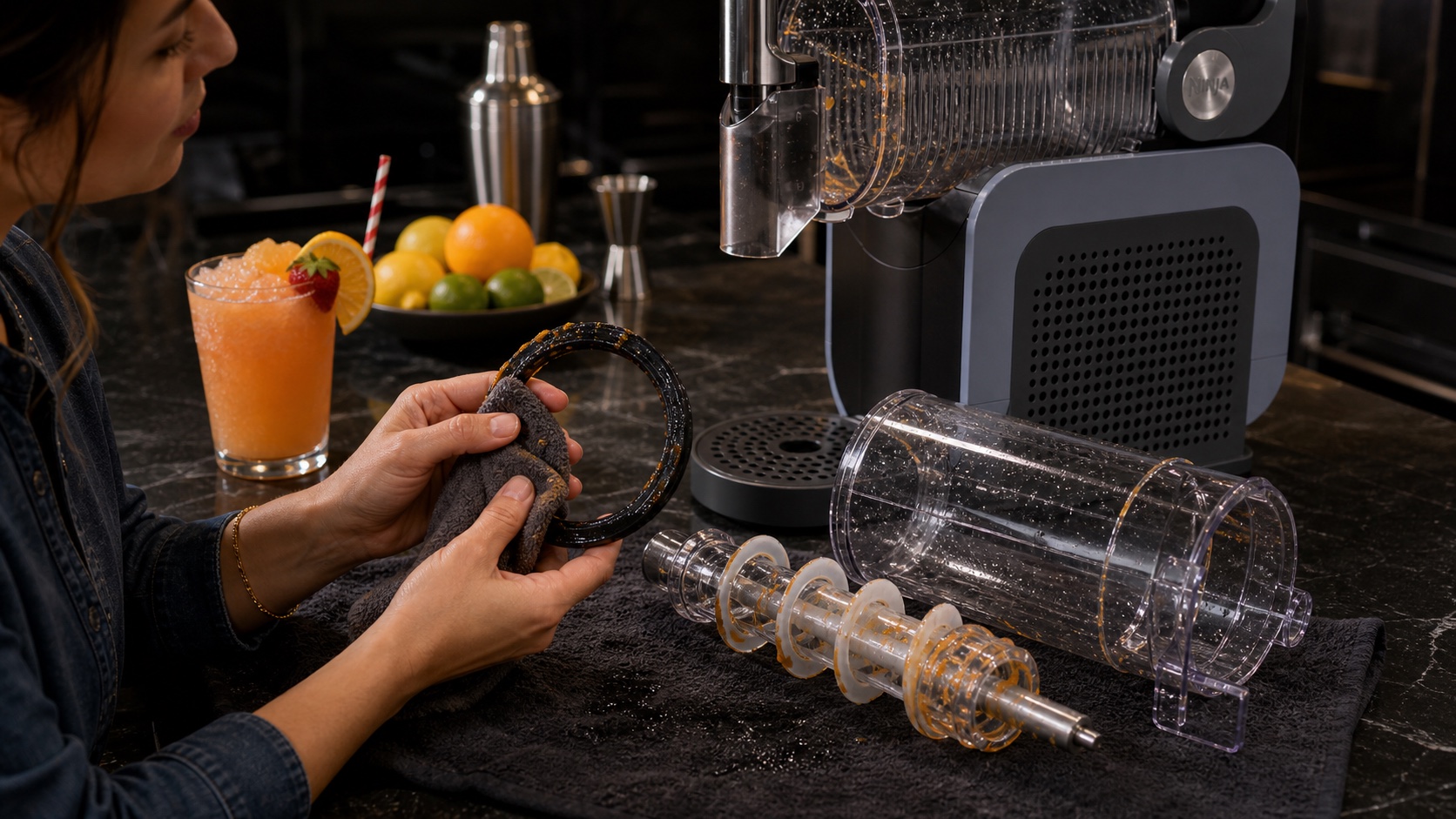
The first practical check is a dry, sticky, or twisted seal. As the machine turns, that seal can grab instead of glide. That is a symptom-based troubleshooting starting point, not a manufacturer diagnosis for every squeak.
Another cause is residue. Syrup, dairy-style mixes, fruit pulp, and sugar film can make smooth plastic and rubber squeak. Rinse mode helps, but parts still need a real wash when residue builds up.
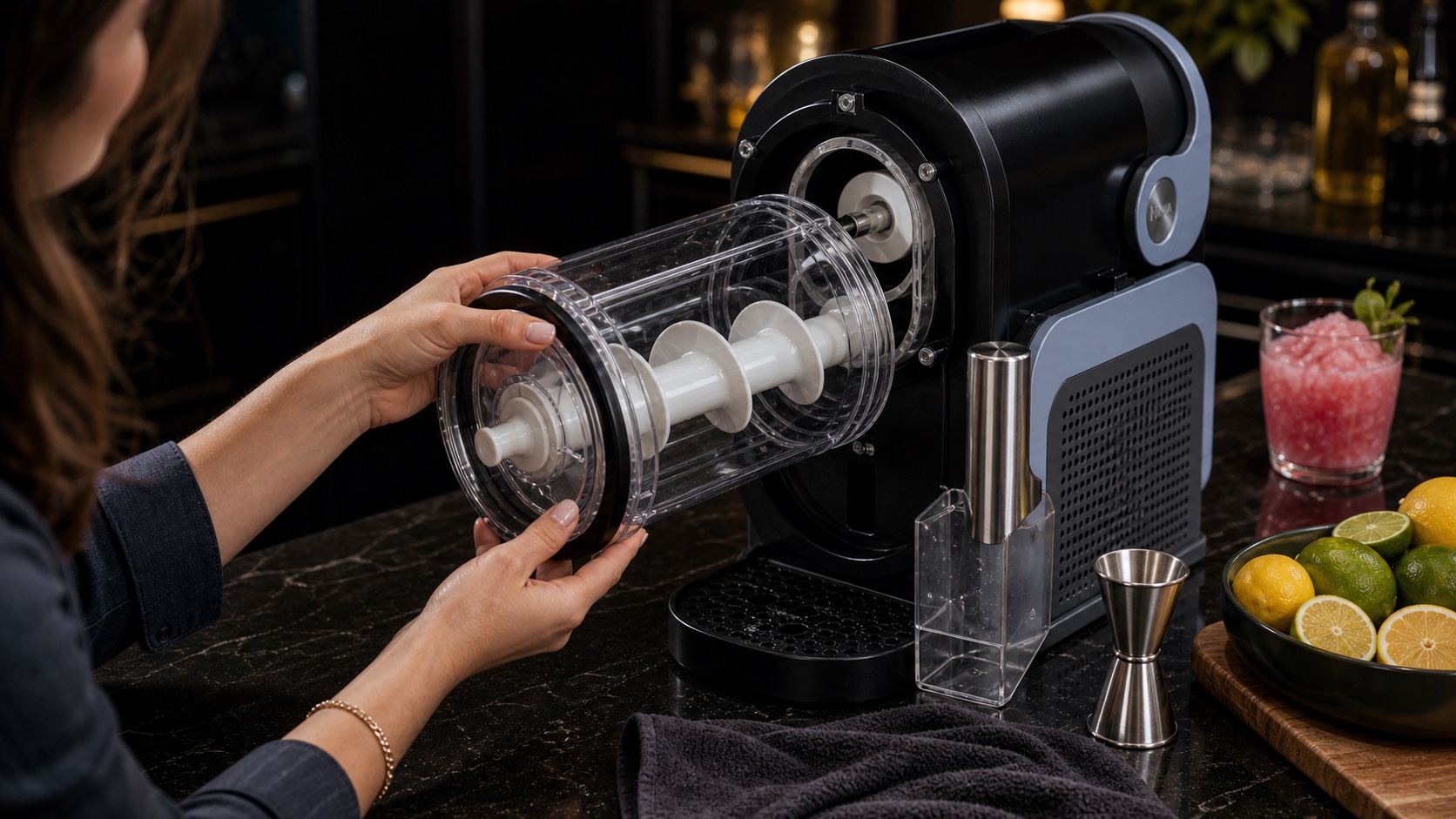
A third possibility is assembly. If the chamber or auger is not seated squarely, the normal contact points can rub at the wrong angle.
Step-by-step fix
- Pause the machine.
- Unplug it.
- Remove the chamber and auger parts.
- Wash contact surfaces with warm water and mild soap.
- Rinse and dry the gasket area.
- Check the gasket for twists, flattening, cracks, or sticky patches.
- Reinstall straight and restart.
Do not add random oil. Use only what your owner guide allows. Food-safe does not automatically mean machine-safe, and a lubricant will not correct a cracked or misshapen part.
Example and limits
This Reddit owner example shows the kind of squeak people may describe after a few runs or a cleaning cycle. It is an owner report, not proof of the cause in your machine.
If the sound is paired with stalling, burning smell, visible damage, a leak, or a drive that will not turn, stop using the unit and contact the manufacturer.
How to prevent squeaking
- Clean sticky mixes promptly.
- Dry gaskets before storage.
- Avoid abrasive scrubbers on clear plastic and seals.
- Do a quick visual check after every full wash.
- Store removable parts without bending or pinching the gasket.
If the squeak is paired with hard ice or stalling, use the scratching guide or knocking guide instead.
FAQ
Is squeaking dangerous?
A mild squeak can come from removable-part friction, but the sound alone is not enough to clear the machine. A loud or changing squeak with heat, smell, stalling, visible damage, or a leak deserves a pause and support check.
Can I lubricate the seal?
Only if your manual recommends it and names the correct product. Otherwise, clean and reseat first.
Why did it squeak after rinse mode?
Rinse mode can loosen residue, but it may not remove sticky film from every contact surface. A hand wash may still be needed.
Related reading
Recipes to make next
Slush recipes from the library that fit this guide — every one balanced to freeze in a home machine.
- BourbonVerification status: Tried & tested

Bourbon Walnut Old Fashioned Slush
View - ProseccoVerification status: Tried & tested

Sarti Rosa Prosecco Spritz Slush
View - ProseccoVerification status: Tried & tested

Sarti Spritz Slush
View - PineappleVerification status: Tried & tested

Piña Colada Slush
View - PineappleVerification status: Tried & tested

Piña Colada Slush
View - BananaVerification status: Tried & tested

Banana Mama Slush
View