Slushable Blog
Slush machine frozen solid? (How to fix an ice block)
If your home slush machine froze into a solid ice block, use this guide to thaw safely, adjust sugar/Brix, and prevent it happening again.

If your slush machine froze solid — like the whole tank turned into a single ice block — you’re not alone. It usually means the mix’s freezing point is too high for how cold your machine is running, so instead of forming soft crystals, it locks up.
The good news: you can fix it without damaging the auger or scratching up the bowl.
TL;DR (Quick Fix)
- Stop the freeze cycle (don’t force the auger through a solid block).
- Let it thaw partway until you can stir the center with a silicone spatula.
- Restart on a warmer setting.
- If it keeps happening, your mix likely needs more dissolved sugar (higher Brix) or less “extra water.”
What’s happening (in plain English)
A home slush machine works by chilling the bowl while an auger keeps the mix moving so it freezes into tiny crystals.
When the mix doesn’t have enough dissolved solids (usually sugar), the freezing point is close to plain water. The machine then pushes the temperature below that point and the whole bowl can freeze as one mass instead of staying scoopable.
Quick reality check: “Frozen solid” is almost never a motor problem first. It’s usually a mix + temperature mismatch.
The main causes
1The mix is too dilute (low sugar / low Brix)
This is the #1 reason. Common ways it happens:
- You topped up with water “to get more volume.”
- You used a very low-sugar base.
- Ice melted in (e.g., you added ice to chill it faster).
2The machine is set too cold for that mix
Even a decent mix can freeze into a block if:
- the setting is max-cold
- the room is cold (garage, basement, winter kitchen)
- you pre-chilled the bowl and the machine is already near target temp
3You started with a warm load and the machine over-corrected
Warm liquid takes longer to stabilize. Some machines run an aggressive freeze cycle early on, and if the mix is borderline, it can “tip” into a hard freeze.
If you’re unsure about normal timing, see: How long does a slush machine take to freeze?
How to thaw safely (without breaking anything)
- Turn off the freeze function (or switch to “mix” only, if you have it).
- Leave the lid open for 5–10 minutes to let warm air help.
- Do not chip the ice with metal tools. Use a silicone spatula and gentle pressure.
- Once you can break up the center, stir and wait. You’re aiming for “thick smoothie,” not fully liquid.
- When it moves again, restart on a warmer setting.
If your machine was recently cleaned/descaled and you’re seeing weird temperature behavior, double-check your setup and maintenance steps: How to clean a home slush machine (step-by-step)
Step-by-step fix (so it doesn’t re-freeze)
1Confirm the symptom
- Solid block (can’t stir, auger strains) → treat as “too cold / too dilute.”
- Hard outer ring but liquid center → different issue; see: Slush freezing to the sides (ice ring): causes and fixes
2Warm the setting first
Before changing the mix, try the lowest-risk change:
- Move 1–2 clicks warmer (or one notch toward “less frozen”).
- Give it 10–15 minutes to stabilize.
3Fix the mix (increase dissolved sugar, not random additives)
If it keeps freezing solid, your mix needs a higher freezing-point depression — in normal-human terms: more dissolved sugar.
Practical approach:
- If you’re using a labeled mix, follow its dilution instructions exactly.
- If you’re building your own base, measure by weight so you aren’t guessing.
A simple kitchen-scale method is here: How to measure sugar for slush with a kitchen scale
Avoid these common “fixes” that backfire:
- Adding more ice (it melts and dilutes, making the freeze worse)
- Adding plain water to “loosen it” (same problem)
- Cranking colder to “make it more slushy” (you’ll just get a block faster)
4Pre-chill smart (optional)
Starting closer to serving temp reduces the aggressive early freeze.
- Chill the mix in the fridge first (covered).
- Don’t freeze the mix solid in advance.
More nuance here: Should you prechill slush mix?
5Watch the room temperature
Ambient temperature matters more than people expect. If your machine is near a cold window or running in a chilly room, it can effectively behave like it’s set “colder.”
If you suspect that, see: Ambient temperature and slush machine performance
How to prevent it next time
- Measure dilution (don’t free-pour water).
- Start on a middle setting, then adjust.
- Keep the lid closed during freezing.
- If you’re hosting, avoid frequent “open lid / poke / taste” cycles early on.
- If you need to pause service, use “mix only” rather than letting it sit and refreeze.
FAQ
Can a slush machine be too cold?
Yes. If the mix can’t handle the temperature (usually because it’s too dilute), the machine can freeze it into a solid mass.
Is “frozen solid” caused by low sugar?
Most of the time, yes. Sugar is the main lever that keeps slush scoopable by lowering the freezing point.
Should I add alcohol to stop it freezing solid?
Alcohol can act like antifreeze, but it’s easy to overdo and end up with watery slush instead. If you’re making adult slush, use a guide and stay within sensible limits: How much alcohol can a slush machine handle?
My machine is frozen solid — should I chip it out?
No. Let it thaw and soften first. Chipping with metal tools can scratch the bowl or damage internal parts.
Related reading
Recipes to make next
Slush recipes from the library that fit this guide — every one balanced to freeze in a home machine.
- StrawberryVerification status: Tried & tested
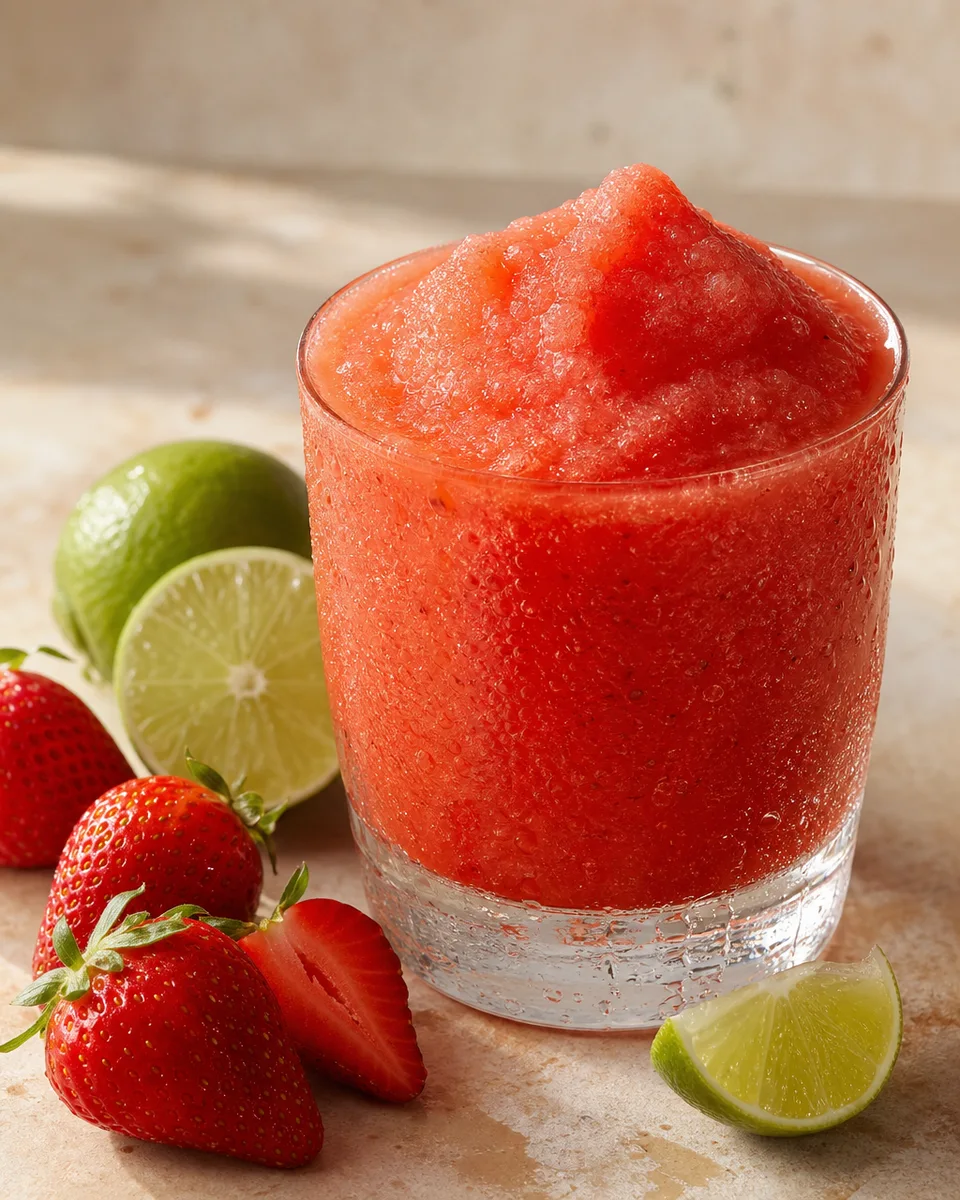
Frozen Strawberry Daiquiri Slush
View - Blue raspberryVerification status: Tried & tested

Blue Raspberry Spiked Slush Cocktail Recipe
View - LimeVerification status: Tried & tested

Frozen Margarita Slush
View - PineappleVerification status: Tried & tested

Frozen Piña Colada Slush
View - BourbonVerification status: Tried & tested

Bourbon Walnut Old Fashioned Slush
View - BananaVerification status: Tried & tested

Banana Mama Slush
View