Slushable Blog
How long does a home slush machine take to freeze? (timing + troubleshooting)
How long does a home slush machine take to freeze? Realistic timing ranges, what Ninja SLUSHi owners should expect by model, and the fastest fixes.

If you’re asking “how long does a home slush machine take to freeze?” you’re not alone. The honest answer: it depends on your room temperature, your mix (especially sugar/Brix), and the machine’s settings.
Most “it’s not freezing” situations aren’t a broken machine. They’re a mix that can’t freeze at the current setting, or a setup detail that’s slowing heat removal.
TL;DR (Quick Fix)
- Typical freeze time: 30–90 minutes from liquid to a scoopable slush texture.
- On a Ninja SLUSHi: plan for 15–60 minutes. The per-model notes are further down this page.
If it’s been 2+ hours and it’s still liquid:
- Turn the thickness one step colder
- Pre-chill the mix (fridge-cold helps a lot)
- Check the mix isn’t too sweet (high Brix = slower/never freezes)
- Make sure airflow/vents aren’t blocked and the bowl isn’t overfilled
If it’s cold but still runny, jump to “Step-by-step fix”.
How long does a slush machine take to freeze (realistic ranges)
Use these as practical expectations, not hard promises:
- 30–60 minutes: Fridge-cold mix, normal room temp, reasonable sugar content, machine set correctly.
- 60–90 minutes: Room-temp mix, warmer kitchen, or a thicker (more insulated) bowl.
- 90–120 minutes: Warm mix + warm room + borderline-high sugar/alcohol (or the machine is struggling).
- 2+ hours with little change: Usually a mix/setting problem (too sweet / wrong setting) or a cooling problem (poor airflow, dirty condenser, low refrigerant, etc.).
How long does a Ninja SLUSHi take to freeze?
Plan for 15–60 minutes, with most balanced batches landing inside the hour. That range comes from the support guidance collected in Ninja SLUSHi not freezing, and it moves with the ingredients, the starting temperature, and how full the vessel is.
SharkNinja does not publish one freeze-time number per model. According to its official product pages, the original SLUSHi (FS301) uses RapidChill Technology and promises slush “in just minutes,” without an exact figure. The SLUSHi XL and SLUSHi Max pages both claim “2X faster” against the FS301. Those are manufacturer comparisons, not measured times. Treat them as direction, not as a stopwatch.
What to expect by model
Fill volume is the part you control, and more liquid means more heat to remove. The max liquid fills below come from Ninja SLUSHi models compared.
| Model | Max liquid fill | What that means for timing |
|---|---|---|
| SLUSHi (FS301) | 64 oz | The baseline. Expect the 15–60 minute range, and the long end near a full fill. |
| SLUSHi 96 oz (FS305CO) | not published | Bigger vessel, same preset generation as the original. Plan like an FS301 with a longer tail. |
| SLUSHi XL (FS601) | 96 oz | Officially “2X faster” than the FS301, but a full fill is 50% more liquid. |
| SLUSHi Max (FS605) | 112 oz | Same “2X faster” claim, and the largest single fill in the family. |
| SLUSHi Twist (FS701) | 48 oz per vessel | The smallest per-side volume, so each side has less liquid to chill. |
Half-filling any of them is the simplest way to shorten a wait.
What changes a Ninja SLUSHi freeze time
- Starting temperature. Fridge-cold in, faster slush out. See should you pre-chill slush mix?
- Sugar. Too little and the machine can flag a low-sugar alert instead of freezing. Too much lowers the freezing point and stretches the wait.
- Alcohol. Spirits push the freezing point down hard. A spiked batch always takes longer than the same drink without it.
- Fill level. A full vessel is the slowest way to run any model.
- Room temperature. A hot kitchen adds heat faster than the machine can remove it. See ambient temperature and slush machine performance.
- The program you picked. Slush, spiked, frozen juice, and milkshake modes do not target the same texture.
If an hour passes with no texture at all, stop waiting and start diagnosing with slush machine taking too long to freeze.
Slushable is independent and is not affiliated with Ninja or SharkNinja.
What’s happening (in plain English)
A slush machine is trying to pull heat out of your liquid fast enough to form tiny ice crystals while the auger keeps them moving.
Two things commonly slow this down:
- Too much “anti-freeze” in the mix (sugar, syrup solids, alcohol). These lower the freezing point.
- Too much heat coming in (warm room, sun on the bowl, blocked vents, warm mix).
So “it’s taking forever” is usually one of two things:
- the mix can freeze, but you’re starting too warm or losing efficiency.
- the mix can’t freeze at that thickness setting, because the freezing point is too low.
The main causes of slow freezing
1The mix is too warm at the start
Starting from fridge temperature versus room temperature can save a surprising amount of time.
Signs: It does eventually slush, but it takes 90+ minutes consistently.
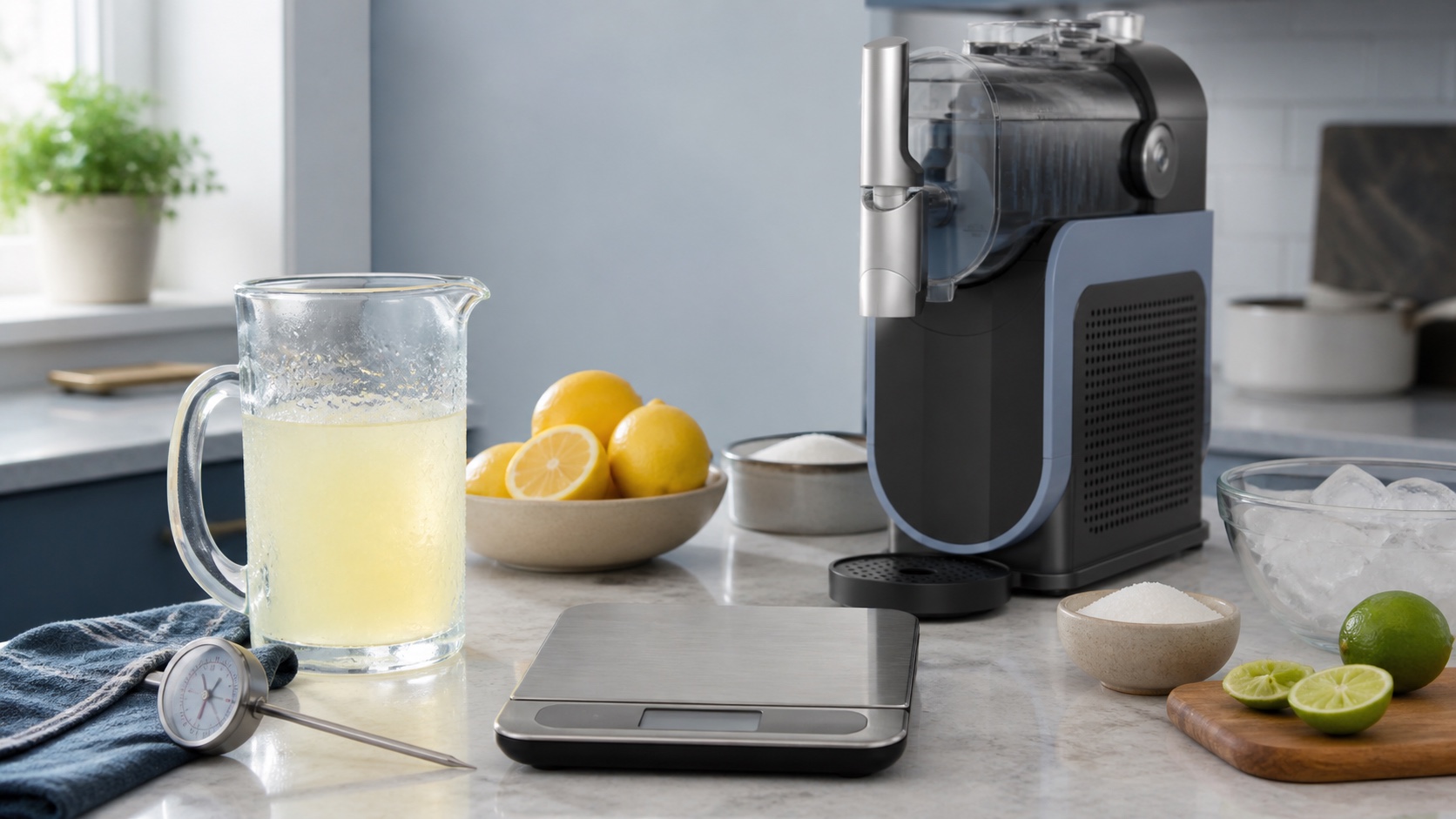
2Sugar (Brix) is too high
Higher sugar = lower freezing point = slower freezing (or “never freezes, just chills”).
Signs: The bowl gets cold, but the drink stays thin. The machine seems to work, but texture never builds.
If you haven’t measured Brix before, this is the one to learn.
3Thickness / hardness setting is too warm
Many machines have a thickness dial/setting that controls how cold the barrel gets (or when it cycles).
Signs: It forms a weak slush, then stalls out at “halfway there,” especially with sweeter mixes.
4Room temperature (and sun) are working against you
Warm kitchens, direct sunlight, and enclosed cabinets can add enough heat that freeze time doubles.
Signs: It freezes fast at night, slow during the day; or it’s slow only in one spot in your house.
5Airflow is blocked (vents, condenser, dust)
If the machine can’t dump heat, it can’t make cold efficiently.
Signs: The sides/back feel very hot, fan sounds different, performance gets worse over weeks.
6Overfilling the bowl
More liquid = more heat to remove, and less headspace for circulation.
Signs: It takes forever when filled to the max line, but behaves when you fill less.
Step-by-step fix (fastest wins first)
Try these in order. After each change, give it 15–20 minutes to show improvement.
1Confirm you’re giving it enough time (and a fair start)
- Start with fridge-cold mix when possible.
- Expect 30–90 minutes depending on conditions.
- If you’re using a fresh-cleaned machine, make sure it’s fully assembled and sealed.
2Adjust the thickness one click colder
Move the thickness/hardness setting slightly colder and watch for a change.
- If it starts building texture, you were simply set too warm.
- If it suddenly goes toward “too thick / freezing solid,” back it off.
3Reduce the heat load
- Move the machine out of sunlight.
- Give it breathing room: don’t block vents.
- If it’s in a cabinet nook, pull it forward while freezing.
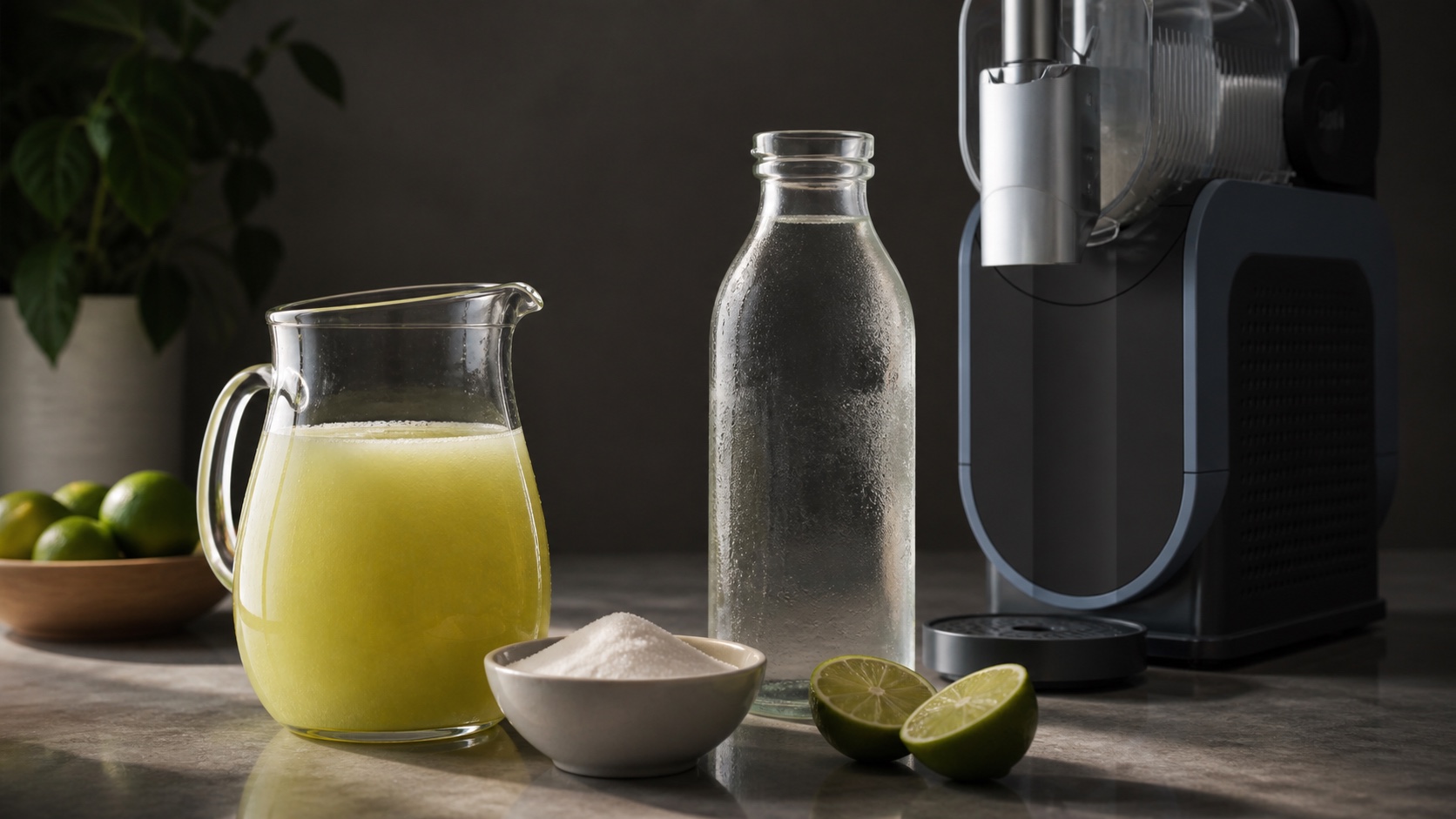
4Check the mix sweetness (Brix) before you keep waiting
If the bowl is cold but the drink stays thin after a long time, the mix is often the culprit.
Quick options:
- Measure Brix (best) and adjust toward your machine’s sweet spot.
- If you can’t measure today: dilute a small test portion with cold water and see if it slushes faster. (This is a diagnostic step — not a “recipe.”)
If dilution fixes it, you’ve confirmed the issue is the freezing point, not the compressor.
5Listen for “not actually cooling” symptoms
If the machine never seems to get cold enough:
- Check for error lights/messages.
- Make sure the auger is turning normally. Some machines won’t cool correctly if the drive system isn’t running.
- If performance has degraded over time, consider dust buildup and maintenance.
How to prevent slow freezing next time
- Pre-chill the mix (fridge-cold in = faster slush out).
- Learn your Brix sweet spot so you’re not guessing.
- Keep the machine in a cooler spot when freezing (ambient temperature matters).
- Don’t max-fill every time; leave room for circulation.
- Do periodic cleaning/maintenance so airflow stays strong.
FAQ
Is it normal for slush to take an hour to freeze?
Yes. For many home units, 45–75 minutes is completely normal, especially if your mix wasn’t pre-chilled.
Why is my slush machine cold but still watery?
That’s often a mix freezing-point issue (too sweet / too much alcohol) or a thickness setting that’s too warm for that mix.
Can I speed it up by turning the thickness all the way up?
Sometimes, but it’s easy to overshoot and end up with a too-thick slush or even a freeze-up. Move one step at a time and give it 15–20 minutes to respond.
Is a Ninja SLUSHi XL faster than the FS301?
SharkNinja’s official XL and Max pages both claim “2X faster” than the FS301, with no published minute figure behind it. A full XL fill is also 50% more liquid than a full FS301. Expect a real gain on the same batch size, not a halving of every wait.
What if it used to freeze in 45 minutes and now takes 2 hours?
That points to an efficiency problem: warmer room placement, blocked vents/dust, or a mechanical issue. Start with airflow and cleaning before assuming something expensive is broken.
Related reading
Recipes to make next
Slush recipes from the library that fit this guide — every one balanced to freeze in a home machine.
- ColaVerification status: Tried & tested

Long Island Iced Tea Slush
View - PeachVerification status: Tried & tested

Peach Citrus Long Island Slush
View - BourbonVerification status: Tried & tested

Bourbon Walnut Old Fashioned Slush
View - ProseccoVerification status: Tried & tested

Sarti Rosa Prosecco Spritz Slush
View - ProseccoVerification status: Tried & tested
Sarti Spritz Slush
View - PineappleVerification status: Tried & tested

Piña Colada Slush
View