Slushable Blog
Slush Machine Freezing Unevenly? (Watery Center, Icy Walls) Causes + Fix
If your slush machine is freezing unevenly (watery middle, icy walls, chunks), here’s the quick fix, step-by-step recovery, and prevention tips.

If your slush machine is freezing unevenly—like you’ve got an icy ring on the walls but a watery center—don’t panic. This is one of the most common “first week” problems with home slush machines, and it’s usually fixable without dumping the batch.
The goal is simple: restore circulation and get your mix back into a range where it can freeze evenly.
TL;DR (Quick Fix)
- Pause freezing / power off cooling for 10–20 minutes (leave the auger/churn on if your machine allows it).
- Scrape the icy walls back into the mix (use the tool that came with the machine; don’t use metal).
- Check fill level: reduce to the recommended line (overfilling kills circulation).
- Check sweetness (Brix): if it’s too low, it over-freezes; if it’s too high, it stays watery.
- Restart and give it 15–30 minutes, then reassess texture.
If the auger stops turning or you hear straining/grinding, stop and follow the step-by-step fix below.
Slush machine freezing unevenly: what you’re seeing (and why it happens)
Uneven freezing typically looks like one of these:
- Watery middle + icy walls (a frozen “collar” forms on the bowl)
- Chunks / flakes that appear suddenly
- One side slushy, one side thin (often after refills or a warm room)
Home slush machines depend on constant circulation. The bowl walls are the coldest surface, so they freeze first. If the mix isn’t moving well, the wall keeps freezing while the center stays warmer—and you end up with two different textures at once.
The main causes (most common → least)
1Overfilling (not enough room to churn)
When the bowl is filled too high, the auger/paddles can’t “flip” the liquid properly. You get a cold, stuck outer layer and a warm center.
2Mix starts too warm
Pouring in room-temp (or warmer) liquid makes the outside freeze before the center has time to cool. That temperature gap is basically an “uneven freezing starter kit.”
3Wrong sweetness range (Brix is off)
Slush needs enough dissolved sugar (or other dissolved solids) to lower the freezing point.
- Too low Brix: the mix freezes too hard at the wall → icy ring / chunks.
- Too high Brix: the mix never thickens → watery center that won’t catch up.
4Ambient temperature + airflow
Warm rooms, direct sun, or a machine shoved into a corner can reduce cooling efficiency or make the compressor cycle oddly—both can show up as “it freezes on the edges but not through.”
5“Partial thaw + refreeze” mid-batch
If you add warm top-ups repeatedly (or let the batch sit), you can create layers: cold slush + warm syrupy liquid. The machine struggles to blend them back together.
Step-by-step fix (recover the batch safely)
1Stop the machine if it’s straining
If you hear grinding, squealing, or the auger seems to slow down, stop. Forcing it can strip gears or burn a motor.
2Soften the icy wall (10–20 minutes)
Turn off cooling for 10–20 minutes.
- If your machine allows churn-only mode, leave the auger running.
- If not, just let the bowl rest.
You’re not trying to melt everything—you’re trying to soften the ring so it can be reincorporated.
3Scrape + reincorporate
Use a silicone spatula or the included tool to scrape the icy wall into the center. Work around the bowl.
If you find a thick frozen collar, break it up gently and stir it into the mix.
4Fix the circulation problem (usually fill level)
- Pour a little out until you’re at (or slightly below) the machine’s fill line.
- Make sure the spout is closed and nothing is dragging on the auger.
5Quick sweetness sanity check
You don’t need a lab. Pick one:
- If it tastes like lightly sweetened juice: it’s probably too low → it will over-freeze at the wall.
- If it tastes like thick syrup: it’s probably too high → it may stay watery.
If you have a refractometer, great—aim for the range your machine/mix style likes (many home batches land roughly in the high teens to low 20s Brix, depending on ingredients). If you don’t, the “taste test” plus results is honestly good enough.
6Restart and give it a full cycle
Restart cooling and let it run 15–30 minutes. Don’t chase the texture every 2 minutes—slush needs time to equalize.
7If it still freezes unevenly
Use this quick decision tree:
- Icy walls keep building fast: reduce fill level, chill your mix first, and double-check sugar is fully dissolved.
- Still watery after 45–60 minutes: check sweetness (too high), room temperature, and that your machine is actually getting cold.
- Chunks keep forming: treat it like an ice chunk problem (linked below).
How to prevent it next time
- Chill your mix first. Cold liquid starts closer to the finish line and freezes more evenly.
- Don’t overfill. Leave headroom for proper circulation.
- Fully dissolve sugar (or syrup) before pouring. Undissolved sugar can create pockets that freeze differently.
- Keep the machine breathing. Give it a few inches of clearance and avoid hot corners.
- Avoid warm top-ups mid-run. If you refill, use pre-chilled liquid.
FAQ
Is uneven freezing a sign my machine is broken?
Usually not. It’s most often circulation + mix setup (fill level, starting temperature, sweetness). If the machine never gets cold or shows error lights, then it’s time to troubleshoot cooling.
Why do the walls freeze first?
They’re the cold surface. If the mix isn’t moving well, the wall keeps freezing while the center stays warmer—so the texture splits.
Can I just add water to “fix” a frozen ring?
Be careful: adding water lowers sweetness and can make over-freezing worse. If you need to adjust, do it deliberately (and preferably by weight), and give it time to mix in.
Should I let it fully melt and restart?
Only if it’s basically a solid block. Most of the time, a 10–20 minute rest + scrape + circulation fix is enough.
What if the auger stops turning?
Stop immediately and follow an auger troubleshooting guide—forcing it can damage the drivetrain.
Related reading
- If you’re getting chunks, start here: Why am I getting ice chunks in my slush?
- If it’s mostly watery: Why is my slush watery? (and how to fix it)
- If the auger is struggling or stuck: Slush machine auger not turning?
- If your room is warm or airflow is poor: Ambient temperature and slush machine performance
- If you want the “why” behind sweetness: Slush Brix for beginners (why it matters)
Recipes to make next
Slush recipes from the library that fit this guide — every one balanced to freeze in a home machine.
- BourbonVerification status: Tried & tested

Bourbon Walnut Old Fashioned Slush
View - LemonVerification status: Tried & tested

Brandy Crusta Slush
View - RhubarbVerification status: Tried & tested

Rhubarb Cordial Slush
View - StrawberryVerification status: Tried & tested
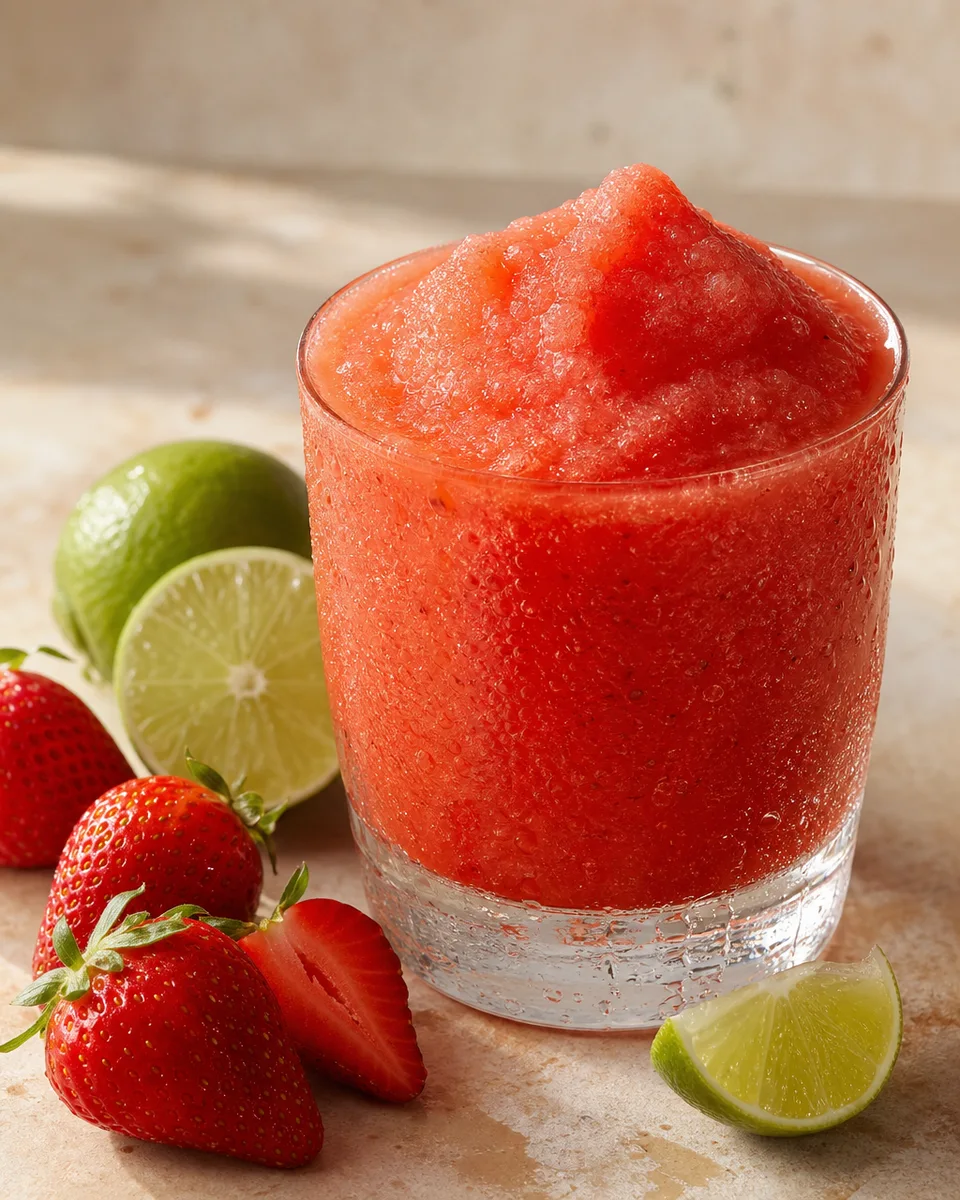
Frozen Strawberry Daiquiri Slush
View - Blue raspberryVerification status: Tried & tested

Blue Raspberry Spiked Slush Cocktail Recipe
View - LimeVerification status: Tried & tested

Frozen Margarita Slush
View